ZIMBABWE’S economy has entered yet another defining moment marked by a complex mix of climate shocks, currency instability, diaspora uncertainty, fiscal pressure and a deep-rooted crisis of confidence.
While official narratives describe a trajectory of stabilisation, market sentiment, high-frequency economic indicators, and lived experiences tell a more intricate story.
The country stands at a crossroads where fundamental economic decisions are no longer merely technical but rather existential.
A persistent trust deficit lies at the heart of Zimbabwe’s economic challenges. For decades, firms, households, and investors have navigated abrupt currency reforms, policy shifts, structural vulnerabilities.
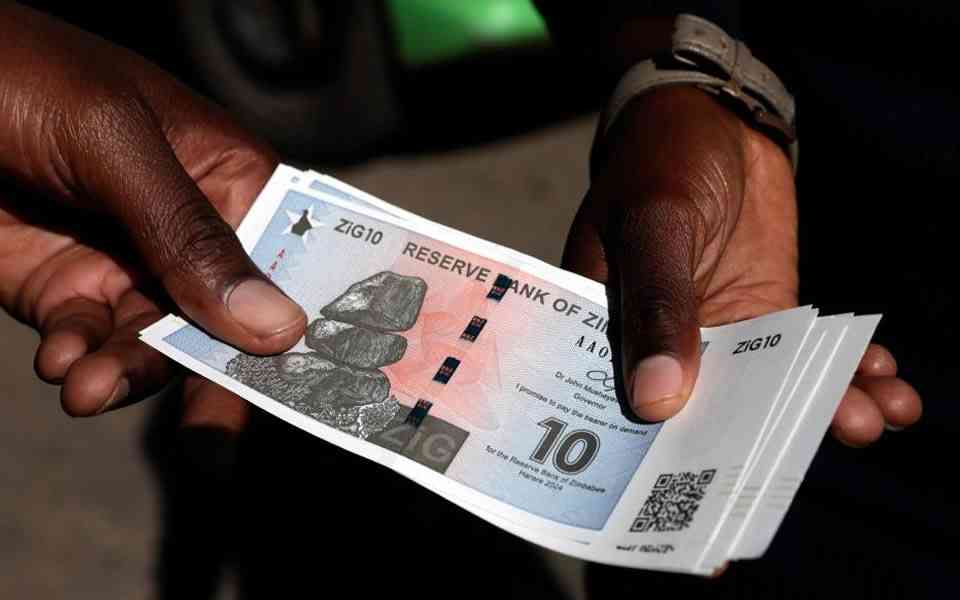
The Zimbabwe Gold (ZiG) currency’s introduction was initially intended to break this cycle, but uncertainty around its long-term stability remains (RBZ, 2024)
Whilst the ZiG, launched in April 2024, was framed as a commodity-backed currency aimed at restoring monetary discipline (RBZ, 2024) has avoided the rapid collapse that plagued the ZWL, its underlying vulnerabilities remain.
Market liquidity is thin, parallel market premiums are widening, and retailers continue pricing informally in US dollars.
A 2025 Chatham House analysis notes that without genuine fiscal discipline, monetary reforms alone cannot restore credibility (Chitiyo & Kwaramba, 2025).
- Govt to distribute grain as hunger stalks millions
- SA court defers Zim permit case
- Coping with drought through WFP’s resilience programme
- Zim’s urbanites facing high prices
Keep Reading
Government expenditure continues to rise predominantly on civil service wages and agriculture thus creating the risk of fiscal dominance, a phenomenon the International Monetary Fund (2024) has repeatedly warned against.
Official inflation figures point to relative stability, but alternative indicators and consumer experiences show otherwise. Rising prices of transport, rentals, food, and healthcare reflect a different inflation reality (World Bank, 2024).
Zimbabwe’s inflation challenge is partly psychological. After years of currency instability, households expect prices to rise, feeding a cycle of accelerated spending and currency flight.
The agricultural output across southern Africa has been severely affected by the El Niño induced drought, with Zimbabwe projected to lose more than half of its maize harvest (Mhlanga, 2025). According to Ocha (2024), Zimbabwe may need to import up to 1.8 million tonnes of grain to cover the deficit.
This shock occurs as government fiscal space is already constrained by external arrears and limited access to concessional borrowing (IMF, 2024).
The World Food Programme (2024) warns that food insecurity could rise sharply, particularly in rural districts already burdened by poverty and lack of irrigation infrastructure.
Zimbabwe’s diaspora contributes over US$2 billion annually in remittances (World Bank, 2024), providing a critical safety net for millions. But diaspora stability is now threatened by policy changes and social tensions abroad.
The UK’s recent immigration overhaul has introduced stricter salary thresholds, limited dependent visas, and tightened care-worker sponsorships (The Telegraph, 2024). These changes disproportionately affect Zimbabweans working in the care sector, a sector central to remittance flows.
Increased employer compliance checks and rising UK living costs may reduce disposable income, creating a real risk of declining remittances in 2025 (OECD, 2024).
South Africa remains the largest source of small scale remittances to Zimbabwe, but Zimbabweans there face shrinking job opportunities, harassment, and a hostile climate driven by anti-migrant groups such as Operation Dudula (SAHRC, 2023).
The uncertain future of the Zimbabwe Exemption Permit (ZEP) leaves hundreds of thousands vulnerable to loss of income or deportation (Statistics South Africa, 2024).
A reduction in diaspora earnings would deepen poverty and reduce liquidity in Zimbabwe’s informal sector already the backbone of household survival (IOM, 2023).
Accounting for over 70% of economic activity, Zimbabwe’s informal sector is a more accurate reflection of economic sentiment than formal indicators (Chitiyo & Kwaramba, 2025).
Current trends show:
l Increasing rejection of the ZiG
l Greater preference for USD
l Lower cross-border trading volumes due to regional currency volatility
l Squeezed profit margins for traders and miners
Notice how the above patterns align with the AfDB (2024) warning that informal sector behaviour can either stabilise or destabilise fragile currencies?
Despite high literacy and tertiary enrolment rates, Zimbabwe continues to experience severe skills underutilisation. Stats SA (2024) and OECD (2024) data highlight that thousands of Zimbabwean professionals abroad work in low-wage roles, whilst those at home remain trapped in gig work, underemployment, and vending disguised in fancy terms like “entrepreneurship”.
With migration pathways tightening, Zimbabwe risks a build-up of underpaid or unemployed youth an economic and social pressure point previously mitigated by emigration (IOM, 2023).
Zimbabwe holds vast mineral reserves, gold, platinum, lithium and a youthful workforce. Yet foreign direct investment remains low due to:
- policy inconsistencies
- bureaucratic delays
- exchange rate risk
- infrastructure gaps
- weak property rights enforcement
Investors are not deterred by risk alone but by unpredictability, as highlighted in the World Bank’s (2024) Zimbabwe Economic Update.
Food for thought: What role do you play in Zimbabwe’s story?
As Zimbabwe navigates this turbulent economic terrain, it is easy to blame policymakers, institutions, and the international environment. But nations are not rebuilt solely by governments, they are rebuilt by citizens.
Pause and ask yourself:
Am I contributing to Zimbabwe’s recovery or to its stagnation?
Here are two powerful actions every Zimbabwean can take today:
- Uphold ethical behaviour within your sphere of influence
Whether you’re a trader, civil servant, professional, employer or diasporan, ethical conduct is nation building. This includes rejecting corruption, honouring contracts, pricing fairly, and modelling accountability (Chatham House, 2025).
- Contribute to community development
As the AfDB (2024) notes, social capital is a fundamental driver of economic resilience. Small, community driven acts compound into national progress:
- mentoring youth
- supporting local schools or clinics
- backing local entrepreneurs
- sharing skills and networks
- assisting vulnerable households
- participating in community oversight
Zimbabwe’s future will not be determined solely by currency reforms or global markets.
It will be determined by collective choices.
What can you do today to be part of Zimbabwe’s solution?
Because nations do not rise when policies change they rise when people choose to rise.