TEACHERS in Zimbabwe are performing their duties “under duress” as poor salaries under worsening economic conditions continue to erode their dignity and working conditions, unions have said.
Schools opened for the first term on Tuesday as teachers continue to demand better salaries and improved working conditions.
Teachers decry low salaries of less than US$400 that they claim have been eroded by a rising cost of living.
Their unions have warned that delays in salary adjustments for teachers will jeopardise the quality of education even though learners are reporting for lessons.
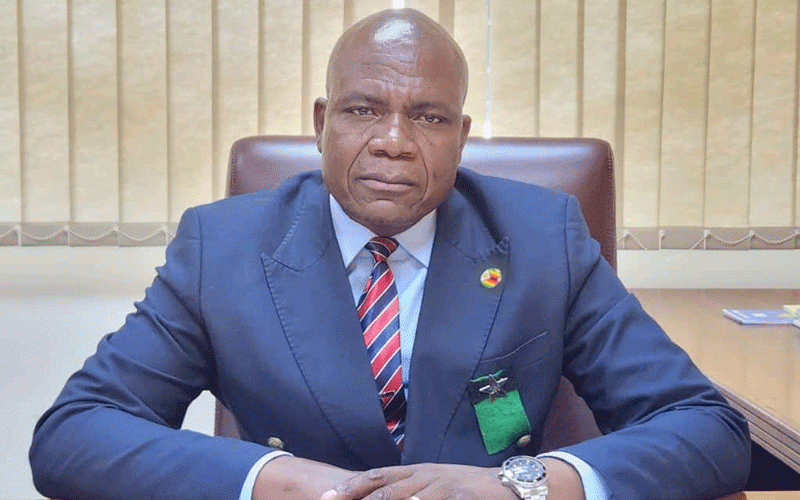
In a statement, Zimbabwe Teachers Association (Zimta) president Akuneni Maphosa said educators were operating under “pressure and strain” caused by low salaries, rising living costs and deteriorating working environments, despite carrying the country’s education system “on their shoulders for far too long”.
“Our teachers are not just professionals. They are patriots. They educate under pressure, serve under strain and they deliver under duress. 2026 must be the year that their dignity is restored and their labour is properly valued,” the statement read.
“As the nation’s largest teacher union, Zimta acknowledges the extraordinary resilience displayed by educators who continue to deliver quality education under persistently difficult economic conditions marked by low salaries, rising living costs and a deteriorating working environment.
“Teachers have carried Zimbabwe’s education system on their shoulders for far too long.”
- Looming showdown between teachers, Govt
- Domestic violence victim laid to rest
- Schools closure fuel drug abuse
- Riding roughshod on restive workers will backfire Mr President
Keep Reading
Maphosa later told NewsDay in an interview that teachers were grappling with poor working conditions, including bloated classes with a teacher-pupil ratio as high as 1:80 in some cases.
“Last year, we were demanding US$540, but we have established a research desk within Zimta that determines the basic needs basket and we have agreed that it stands at US$974,” he said.
“But in terms of the middle income status, we should be at US$1 200. So this is the basis of our demands. It’s not a random figure, it’s based on research.”
Amalgamated Rural Teachers Union of Zimbabwe leader Obert Masaraure said they were demanding a minimum wage of US$1 260 per month “to reflect the value of our labour”.
“As we traversed the country during this opening week, the reality on the ground is heart-wrenching.
“We have witnessed first-hand the systemic collapse of our public education system: crumbling infrastructure, plummeting enrolments and teachers living in a state of constant distress,” Masaraure said.
“While the masses suffer, a predatory class of zvigananda (leeches), many of whom sit in the very government responsible for this decay, are cashing in.
“Their private schools thrive while our public institutions are deliberately starved of resources.”
Progressive Teachers Union of Zimbabwe leader Takavafira Zhou said educators were demanding an urgent rescue allowance in the form of a cost of living allowance.
“It is imperative that the employer must take the legitimate demands of teachers seriously as a prelude to sustainable development of the nation,” he said.
“There is, therefore, a greater need for unity of purpose across the teacher unions or even civil-servant divide in order to build a critical force that can unreservedly and unflinchingly push the legitimate demands by all means necessary.”