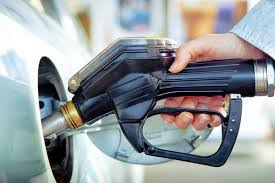
ZIMBABWE’s fuel prices at US$1,53 and US$1,52 per litre of petrol and diesel, respectively, makes the country Africa’s fourth priciest fuel market, a Nigerian market researcher has found.
These current prices are also described as a high-cost anomaly in the Southern African Development Community (Sadc).
According to Frontier Africa Reports, a Nigerian market analyst and researcher, with Triangle Limited already registered as an ethanol producer alongside Green Fuel, failing to leverage on this competition exposes deep rot in the fuel industry.
It also exposes exorbitant taxes, monopolistic distortions and logistical decay.
“Zimbabwe’s fuel prices in April 2025, set at $1,53 per litre for petrol and $1,52 per litre for diesel in USD by the Zimbabwe Energy Regulatory Authority (Zera), eased from March’s US$1,54 and US$1,55,” Frontier Africa Reports said in a new analysis.
- West Prop turns lifestyle living into a profit-making venture
- Vungu Solar signs 25-year deal to deliver 30MW to national grid
- Invictus loses US$90m as Qatari deal collapses
- ECA, Morocco sign host agreement ahead of 2026 ministers’ conference
- ZimTrade to host annual conference next month
“Yet, the country clings to its rank as Africa’s fourth priciest fuel market and a high-cost anomaly in the Southern African Development Community (Sadc).”
This analysis, rooted in data, tears into Zimbabwe’s pricing mechanics, stacks it against regional and global benchmarks, and maps a hard-hitting fix, maximising Triangle’s role and beyond.
“In March 2025, Zimbabwe’s petrol (US$1,54) trailed only South Africa (US$1,59) and Malawi (US$1,65) in Sadc, with diesel (US$1,55) topping South Africa’s US$1,47 but lagging Malawi’s US$1,70,” Frontier Africa Reports said.
“Angola’s subsidies held petrol at US$0,36 and diesel at US$0,16, Botswana’s at US$1,09 and US$1,04.
“Across Africa, Zimbabwe’s US$1,54 petrol ranked fourth, behind the Central African Republic (US$1,82), Seychelles (US$1,67), and Malawi (US$1,65), with diesel (US$1,55) outpaced by CAR (US$2,03) and Seychelles (US$1,70).”
According to Frontier Africa Reports, April’s US$1,53 and US$1,52 pricing is despite Brent Crude’s 5,5% slide from US$72 to US$68 per barrel, leaving it at 29% above global averages.
“South Africa’s petrol dropped US$0,39 to US$1,20, buoyed by a 6% rand gain (ZAR18,23 to ZAR18,05/US$1), while Zimbabwe’s USD-only pricing, tethered to a ZiG with a 27% parallel market premium (ZiG26,77/US$1 official vs ZiG34/US$1 street), stifles global relief,” Frontier Africa Reports said.
“Zimbabwe’s fuel sector is a US$1 billion-plus annual import vortex, 4% of its US$27 billion GDP [gross domestic product] crippled by a 34% tax-and-levy bite (US$0,52-US$0,54/litre), far exceeding Botswana’s 17% and South Africa’s 29%.”
The market researcher noted that ethanol, blended at 10%, is a cash cow for Green Fuel, charging US$1,10 per litre against a global US$0,60-US$0,70 norm, padding petrol costs by US$0,04-US$0,05/litre.
Green Fuel is co-owned by business tycoon Billy Rautenbach, who has been linked to President Emmerson Mnangagwa.
The other owner is the Agricultural Rural Development Authority.
“Triangle, registered and producing, offers ethanol at an estimated US$0,80-US$0,90 (cane-based, per regional benchmarks), but its market share is throttled, Green Fuel, tied to alleged government insiders, hogs 80% of supply, per 2023 Zimcodd [Zimbabwe Coalition on Debt and Development] data,” Frontier Africa Reports said.
“The Feruka pipeline’s 35-year dormancy jacks transport costs from Beira to US$0,10/litre (vs US$0,03 potential). Imports hit 1,2 billion litres yearly, with no domestic refining to offset.”
Globally, April 2025 sees Brent Crude at US$68, down 5,5%, with the Organization of the Petroleum Exporting Countries pumping 2,2 million barrels/day extra and demand off 1,2%.
The US diesel runs at US$0,94/litre (low taxes), while for Germany, its US$1,83 (high levies).
“Zimbabwe’s M-1 import pricing (crude plus freight) should echo this dip, but taxes, ethanol gouging, and forex distortions keep it 29% above the US$1,18 petrol global mean,” Frontier Africa Reports said.
“South Africa’s 500 000-barrel/day refining and Angola’s 1,1 million-barrel/day output dwarf Zimbabwe’s zero-production handicap.”
It noted that the ZiG’s official rate masks a 27% black-market gap, inflating real import costs.
“To gut prices, Zimbabwe must weaponise Triangle and dismantle inefficiencies. First, cut taxes to 20% (US$0,30/litre), matching Botswana, saving US$0,23/litre, US$276 million yearly at 1,2 billion litres,” Frontier Africa Reports said.
“Second, flood the ethanol market, capping it at US$0,70/litre (viable with scale, per cane ethanol costs), slashing blending costs by US$0,04/litre (US$48 million annually) and kneecapping Green Fuel’s US$1,10 racket.”
Thirdly, Frontier Africa Reports called for the revival Feruka (US$200 million, phased at US$40 million/year) to drop transport to US$0,03/litre saving US$0,07/litre (US$84 million yearly) and make Zera to publish M-1 breakdowns monthly, axing opacity markups.
This would lead to a total cut US$0,44/litre, landing petrol at US$1,09, diesel at US$1,08, Botswana territory.
“Zimbabwe’s US$1,53 petrol and US$1,52 diesel in April 2025 lock it as Africa’s fourth costliest, behind CAR (US$1,82), Seychelles (US$1,67), and Malawi (US$1,65), and a Sadc outlier against Angola (US$0,36) and South Africa (US$1,20),” Frontier Africa Reports said.